Tuesday, February 22, 2022

Phillies 1921: Rookie Goldie Rapp's Record Setting Hitting Streak


In 1948, the Phillies Richie Ashburn tied the modern baseball (since 1900) rookie record for hitting streaks with hits in 23 straight games. While Ashburn went on to a Hall of Fame career from there, the man whose record he tied, also a Phillie, has been lost to obscurity. His name was Joseph Aloysius "Goldie" Rapp, a switch-hitting third baseman who set the record in 1921. Not only did Rapp hit in 23 straight that year, but he hit safely in the first 23 games in which he appeared in a Phillies uniform.

By the time Goldie Rapp got to the Phillies, he had spent seven years in the minor leagues, served 18 months in the Army during World War 1, led the American Association in hitting with a .335 average, and been traded by the New York Giants to the Phillies along with Lee King and Lance Richbourg for Johnny Rawlings and Casey Stengel. Goldie got his colorful nickname because of a gold front tooth he sported, the result of a tooth lost to a childhood slip on the ice.

Legendary Giants manager John McGraw had purchased Rapp from the St. Paul Saints after Rapp's league leading year in 1920. Coming out of spring training, McGraw made Rapp the starting third baseman for the pennant contending Giants. Rapp hit only .215 in 58 games, however, and the impatient McGraw moved him to the Phillies on July 1. The Phillies were in need of defensive help on the infield. The incumbent, Russ Wrightstone, was a good hitter but a defensive liability. Phillies manager "Wild Bill" Donovan hoped Rapp would be a defensive upgrade. When Rapp arrived, Wrightstone moved to left field.

Rapp played his first game for the Phillies on July 7. Batting leadoff, he singled in his first Phillies at bat off the St. Louis Cardinals future Hall of Famer Jesse Haines. He walked and scored a run in the third on a Wrightstone two RBI single. The Phillies lost the game 15-2, allowing 14 runs in the last four innings. The next day the Phillies turned the tables on the Cards, winning 9-4. Rapp had three hits, including an RBI double, and scored two runs.

The hits kept coming for Goldie Rapp and they often came in bunches. During the streak, he had 11 multi-hit games. In one four game stretch from July 21-24, he rapped out nine hits in 17 at bats. His batting average during the streak was .381. Among his 37 hits were six doubles and one home run. The home run led off the game against the Chicago Cubs at Cubs Park (now Wrigley Field) on July 26, in a game the Phillies won, 6-2. The homer was one of only two that Rapp hit in his major league career.

Former Phillies great Grover Cleveland Alexander, now with the Cubs, shut the Phillies out, 10-0, on six hits in the first game of a doubleheader on July 20. Rapp, however, kept his streak alive with a sixth inning single off Old Pete. On July 30, Rapp finished off his streak in style with five hits, including a double and triple, in a doubleheader against the Cubs in Chicago. The streak ended the next day as Rapp went 0-for-4 with a walk against Elmer Ponder and the Cubs.

One week after the streak ended, Rapp was in the hospital with an inflamed appendix. He elected not to have surgery and returned to the team on August 14. But whatever magic Rapp had captured in his first month with the Phillies was gone. Whether it was the appendix or some other cause, Rapp hit just .183 the rest of the season. He had only two multi-hit games from August 1 to October 1. 

Rapp was the regular third baseman for the Phillies in 1922, a year they went 37-96-1 and finished in seventh place. He was on the shelf for several weeks in May after he broke two ribs and sprained an ankle and wrist diving into the dugout after a foul ball. Rapp was hitting just .218 by the end of August but finished with a flourish to get his average up to .253 by the end of the season. 

In 1923, new Phillies manager, and former shortstop Art Fletcher named Rapp the team captain. Fletcher was no doubt impressed by the hustling, chatterbox style that Rapp displayed. By July, however, with the Phillies record at 12-30, Fletcher decided to shake up the team. Among several changes, Goldie Rapp was released. His contract was sold to the Fort Worth club in the Texas League. Rapp played in the minor leagues for six more years, but never made it back to the majors. In his late 40s, he served in the Naval Reserves during World War 2 as a Chief Ship Fitter.

Goldie Rapp still holds a share of the National League rookie record for hitting streaks in the modern era. Both Ashburn and Alvin Dark of the Boston Braves had twenty-three game streaks in 1948. Mike Vail of the 1975 New York Mets also matched the record. The American League rookie hitting streak record is 26, set by the Chicago White Sox outfielder Guy Curtright in 1943. The all-time record is 27, set by Jimmy Williams of the Pittsburgh Pirates in 1899. Amazingly, Williams also had a 26-game streak that same year.
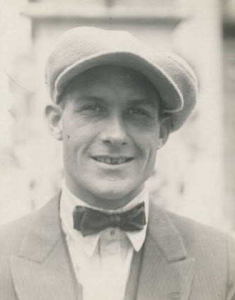
Goldie Rapp and his gold tooth


Tuesday, February 15, 2022

Ed Roebuck: Unsung Hero of 1964 Phillies

If the Phillies had only managed to hold on to the 6 1/2 game lead they held in the National League pennant race on September 20, 1964, so many things might have been different. Maybe that talented team would have gone on to win more pennants. Maybe Dick Allen would have stayed in Philadelphia as a hero rather than as the fan target he became. Maybe Johnny Callison would have fulfilled all of his great promise. Maybe Gene Mauch would have learned to relax and trust his young players more. Maybe some of the tarnish of that "city of losers" tag would have been washed away. Maybe. But also, maybe Ed Roebuck, a largely forgotten figure on the 1964 team, would have been remembered as the major contributor to the teams succuss that he most certainly was.

The 32-year-old Roebuck was acquired by the Phillies on May 21 to shore up a mostly inexperienced bullpen. Roebuck was the quintessential late inning reliever. His out pitch was a sinker ball that forced hitters to hit the ball on the ground. "What I want to do is get two outs with one pitch," Roebuck told the Philadelphia Inquirer's Frank Dolson. "If they get five straight hits off me through the infield, I can't complain. The next pitch, I may get the double play." 

Roebuck had pitched for the Brooklyn/Los Angeles Dodgers for eight seasons and had generally pitched very well when his arm was sound. He missed all of 1959 and most of 1961 with arm miseries. He also had plenty of experience in pennant races. He was a major contributor to the Dodgers 1955 and 1956 pennant winners and appeared in two World Series.

Roebuck forced a trade to the Washington Senators in 1963 because he did not get along with Dodgers' manager Walter Alston, whom he called "inept," and because his good friend Gil Hodges was managing the Senators. One year later, at the urging of manager Mauch, Phillies general manager John Quinn purchased Roebuck from the Senators. Mauch had gotten to see Roebuck pitch when he managed him in a California All-Star game over the winter. Roebuck was pleased with the deal. He did not care for the high strike zone then prevalent in the American League. His heavy sinker was often called a ball by American League umpires.

In Philadelphia, Roebuck teamed with Jack Baldschun to form nearly the whole of the 1964 Phillies bullpen. Baldschun worked in 71 games, while Roebuck worked in 60. The other members of the Phillies bullpen were the teenaged rookie Rick Wise and the largely ineffective John Boozer and Dallas Green. None of those three worked in more than 25 games.

Roebuck hit the ground running for the Phillies. He held the opposition scoreless in his first 15 appearances over 17 innings, racking up seven saves in the process. On May 14, Roebuck entered a game at Connie Mack Stadium against the St. Louis Cardinals in the top of the eighth with no one out, two men on, and a 3-1 count on the batter. The Phillies were clinging to a one run lead. Chris Short, who had relieved Jim Bunning with one on in the eighth, was pulled in favor of Roebuck. It's unusual for a manager to replace a pitcher with a 3-1 count on the batter, but Mauch said, "I hated to take Short out, but I had no place for a base on balls. When I think of Roebuck, I think of strikes, not balls." 

Roebuck threw two strikes. James missed them both. On the last strike, the Cardinals tried a double steal. Clay Dalrymple threw Boyer out at third for a strike 'em out, throw 'em out double play. Roebuck then struck out Julian Javier to end the inning. Roebuck finished off the save with a scoreless ninth. The win ended a Phillies' three game losing streak.

On June 9, Roebuck worked three innings of one-hit, no-run relief against the Pittsburgh Pirates to save a game for Art Mahaffey, 4-3. On August 1, Roebuck relieved Wise and shut down the Dodgers for 2 2/3 innings to earn his 11th save in a game the Phillies won, 10-6. On September 19, just before the Phillies big collapse began, Roebuck pitched five scoreless innings in an eventual 16 inning, 4-3 Phils loss to the Dodgers. Roebuck was extraordinarily effective against his old team all year. In 12 1/3 innings against the Dodgers, Roebuck gave up just five hits and no runs.

Roebuck pitched five times during the ten-game losing streak that cost the Phillies the pennant. While he pitched scoreless ball in four of those appearances, he could not escape making his own contribution to the Phillies downfall. In a September 23 game against the Cincinnati Reds, Roebuck coughed up a two-run homerun to Vada Pinson. The Phillies lost, 6-4.

Ed finished the season with a 5-3 record, a 2.21 ERA, and 12 saves in 77 1/3 innings pitched. His WHIP was just 1.034 and he tied Short for the staff lead in ERA+ at 158. As to the Phillies' failure to win the pennant, Roebuck was clear-eyed. "The 1964 Philadelphia Phillies were not a pennant-winning-caliber team," Roebuck told his SABR biographer Paul Hirsh. "If the season lasted long enough that would eventually have shown. Gene [Mauch] did a great job to have us where we were. During those last two weeks we were losing every crazy which way you could."

After a mediocre year with the Phillies in 1965 and just six appearances in 1966, Roebuck was shipped to the minor league San Diego Padres where he closed out his career. There is one footnote to his major league career that is worth mentioning, however. Roebuck was renowned as one of the finest fungo hitters in baseball. He launched fungoes over the scoreboard at Busch Stadium in St. Louis and off the far away centerfield wall at the Polo Grounds. Dodger manager Alston once fined him $75 dollars for hitting a ball into the colonnaded wall of the Los Angeles Coliseum. His fungo prowess was so legendary that he was asked to hit fungoes as high as he could to help the architects of then under construction Astrodome in Houston determine how high to make the roof so players could not hit the girders. 

After retiring from pitching after the 1967 season, Roebuck worked for 40 years as a scout for various major league teams. He died at the age of 86 in 2018.


Tuesday, February 8, 2022

Mike Schmidt’s First Major League Homerun: September 16, 1972

Mike Schmidt wearing #22 in 1972
The Philadelphia Phillies drafted future Hall of Famer Mike Schmidt out of Ohio University in 1971 in the second round of the June Amateur Draft. After a half season at AA Reading, and a full season at AAA Eugene, where he hit .291 with 26 homeruns, Schmidt was a September 1972 callup to the big leagues. He played in his first game and got his first hit, a single, when he entered a September 12 game against the Mets in the second inning. The Phillies regular third baseman, Don Money, had to leave the game with a muscle spasm in his right shoulder. Schmidt got his first start the next night and went 0-for-4. 

Schmidt's second start, against the Montreal Expos at Veterans Stadium on September 16, was a memorable one. At this point in the year, both the Expos and the Phillies were playing out the string on a long season. The Expos were 64-76, in fifth place in the National League East Division 25.5 games behind the division leading Pittsburgh Pirates. The Phillies at 51-89 had the worst record in the major leagues. A small crowd of 6,471 was in attendance, but that group did include Schmidt's parents, Lois and Jack "Smitty" Schmidt. 

The pitching matchup was the Phillies Wayne Twitchell (3-8) against the Expos 21-year-old rookie Balor Moore (8-7), a left-hander, who was coming off two consecutive shutouts. The Phillies lineup featured so many September callups that Montreal manager Gene Mauch spoke to his veteran catcher Tim McCarver before the game saying, "We're going to have to talk things over when we get back [in the clubhouse]. I don't know anything about Craig Robinson or Bob Boone or Mike Schmidt." McCarver said, "I don't know anything about Schmidt, either."* Later that night Schmidt would give them a lesson in pitching to Schmidt.

Twitchell retired the Expos in order in the first. With one out in the bottom of the first the Phillies threatened when Terry Harmon tripled to centerfield. Harmon was erased, however, when he tried to score on Luzinski's flyball to right. Right fielder Ken Singleton gunned Harmon down at the plate.

The game remained scoreless until the fourth when the Expos eked out a run. With one out, Singleton walked and moved to third on a Ron Fairley single. Singleton scored as McCarver rolled weakly to short into a force out. Meanwhile, the Expos Moore kept extending his scoreless streak. That streak had reached 25 innings when the Phillies came to bat in the seventh inning.

Harmon led off the seventh with a single to left and moved to third when Luzinski followed with another single to left. Joe Lis then smashed a screaming line drive that shortstop Tim Foli snared with a dive to his right. Luzinski, who had been running on the pitch in an effort to avoid a double play, was easily doubled off first. It looked like the nascent rally might die, but at this point manager Mauch faced a decision. Phillies right fielder Roger Freed strode to the plate.

Freed was in his second year with the Phillies, who traded Grant Jackson and Jim Hutto to the Baltimore Orioles to get him after Freed had put up impressive numbers at Rochester in the International League. Freed had been a disappointment, hitting just .221 with six homeruns in his rookie year of 1971. His sophomore campaign had been little better, but with the tying run on third, two out, and an untested rookie on deck, Mauch ordered Balor to walk Freed intentionally.

Pitcher Moore tells the story of what happened ** "[McCarver] comes to the mound and asks what I know about Schmidt. We decide not to get beat on anything but my fastball. After two pitches we have the count in our favor, 0-2 and call for a fastball low and away. Good call. Bad pitch. Normally my fastball away will tail off the plate but, in this instance, it started low and away and ran back over the heart of the plate."

Schmidt smashed the pitch over the wall for a three-run homerun, the first of his 548 major league homers. Schmidt slapped hands with Harmon and Freed at the plate and the Phillies suddenly had a 3-1 lead. In the eighth inning, lefty Mac Scarce replaced Twitchell with two men on and two out. Scarce escaped that jam with no damage and closed the game out with a scoreless ninth inning for his third save of the season. 

Talking about his big homerun after the game, Schmidt told the Philadelphia Inquirer's, Bruce Keidan, "I consider myself a power hitter, in the sense that a power hitter is someone who doesn't have to get all of the ball to hit it out. I didn't get all of that one tonight. I got it down on the end of the bat. I really didn't have any idea it was going out." A reporter reminded Schmidt his 26 homeruns tied him for second in the Pacific Coast League with teammate Joe Lis and Schmidt replied, "I also led the league in strikeouts with 140 something."

And so, Phillies fans were not only introduced to Mike Schmidt the power hitter, but also to Mike Schmidt the enigmatic analyst of his own performance. It would be quite a ride for the next 17 years.


*Bruce Keidan, "Mike Schmidt's First Homer Gives Phils Win Over Expos," Philadelphia Inquirer, September 17, 1972: 66.

**from Every Pitcher Tells a Story by Seth Swirsky (Times Books, 1999). Moore's memory may be a bit faulty here. Newspaper reports say the count was 1-2 when Schmidt connected. Keidan also reported that the pitch was a high fastball.


Tuesday, February 1, 2022

Karl Drews: Ain’t that a Kick in the Head

In 1952 the Phillies had three pitchers in the top ten in virtually every statistical category. Long time students of Phillies history can probably name two of those pitchers: Robin Roberts and Curt Simmons. Likely only a few can name the third.  That would be a journeyman righthanded refugee from the minor leagues named Karl Drews. The 6' 4", 190-pound Drews went 14-15 for the Phillies in 1952, which may not sound that impressive until you add that he also had a 2.67 ERA, threw five shutouts, and 15 complete games over 228 innings. Drews was particularly effective against the pennant winning Dodgers, beating them four times, including two shutouts. He accomplished all this with a metal plate where part of his skull used to be. In fact, Drews himself credits the injury that resulted in the plate being inserted in his head with turning his career around.

Karl Drews professional career began in 1939 with the Class D Butler (Pennsylvania) Yankees in the old Pennsylvania Association. He gradually worked his way through the Yankees minor league system with stops up and down the east coast until he landed at the top Yankee farm team in Kansas City in 1946. Drews was exempt from service in World War II. Although he tried to enlist, he was rejected due to a heart murmur that was the result of the rheumatic fever he had when he was in high school. Drews' best weapon as a pitcher was a hard sinking fastball. The sink was the result of a broken finger he suffered during a pepper game that caused him to change his grip on the ball.

Drews was called up to the Yankees in the fall of 1946 and stuck with the team with indifferent success for 2 1/2 seasons. In mid 1948 he was dealt to the lowly St. Louis Browns. After a terrible 4-12 season with a 6.48 ERA in 1949, St. Louis sent Drews to their minor league affiliate in Baltimore. In five seasons in the major leagues, he was 15-24 with an ERA close to 6.00. His chief difficulty was his control. He averaged more than seven walks per nine innings.

Early in the 1950 season with Baltimore, Drews was attempting to cover first base on a slow roller to the right side. Second baseman Eddie Pelligrini's throw was low and wide, forcing Drews into the baseline, where base runner Dutch Mele's knee struck him in the temple. Drews was carried off the field. He had suffered a fractured skull. A few days later surgery was performed to remove bone fragments from his brain, and a silver plate was inserted in his head. 

Drews came out of the hospital a changed man. He told the New York Post's Milton Gross, "All the time I was in the Yankee chain I was a strange kind of guy. I worried about a heart murmur I was supposed to have. I got mean and morose. I lost my taste for the game."

"Then a funny thing happened. After the accident, I developed some sort of personality change. I became a different guy on the field and a different guy off it. When I came back to pitch, I found I couldn't hurry myself. Before when I got wild, I kept throwing faster and faster and getting wilder and wilder. Now I took my time. The ball started going where I wanted it."*

In 1951, the Baltimore franchise shifted affiliations to the Philadelphia Philles and Drews became Phillies' property. After an outstanding 17-13 season, Drews was a September call up. He got into five games, including a complete game 7-3 victory over Don Newcombe and the Brooklyn Dodgers. That win struck a damaging blow to the Dodgers who were trying to hold off the streaking New York Giants in the pennant race. Suddenly, 32-year-old Karl Drews had cast himself into the conversation to be a member of the 1952 starting rotation for the Phillies.

Drews was indeed in the starting rotation to start 1952. He lost his first two starts 2-1 and 3-0 despite pitching well. In his third start on May 10, however, he announced to the league what kind of pitcher he could be. Drews threw a complete game, 2-hit shutout over the Brooklyn Dodgers at Ebbet’s Field, winning 4-0. The only two hits he allowed came in the first inning on back-to-back singles by Billy Cox and Jackie Robinson. Drews retired Roy Campanella and Andy Pafko to escape the inning. The former wild man walked only one, Duke Snider in the eighth inning. The only other man to reach base was on a Willie Jones bobble at third base. Jones hit a two-run homer in the second inning to give Drews all the runs he would need. The Phillies padded their lead in the fifth on an Eddie Waitkus single, a Richie Ashburn double, and a Granny Hamner single. Drews coasted home from there.

Drews became an unwelcome sight for Dodger fans on the mound in Brooklyn. On June 30, he shut the Dodgers out again, this time on five hits, all singles. On August 17, he beat the Bums for a third time. This time by a score of 2-1, the only run scoring on a Willie Jones error. The Dodgers managed four hits, again all were singles. 

At home in Shibe Park on June 22, Drews shut out the Cincinnati Reds on five singles, besting future Phillies hurler Herm Wehmeier in a game shortened to seven innings by darkness.  He shut out the Chicago Cubs on July 27, 3-0 on six singles. In that game a sixth-inning three-run home run by Hamner off Cubs ace Bob Rush provided all the scoring. Drews fifth and final shutout of the year came at home on August 13 over the Boston Braves. Home runs by Del Ennis and Connie Ryan provided the only offensive support Drews needed.  In this game, Drews allowed just five singles.  His sinker seemed to be inducing a lot of ground balls and weak contact. Remarkably, in the five shutouts he pitched in 1952, over 43 innings, Drews allowed just 22 hits, every one of them a single. 

At the end of the year, Karl Drews was second only to Robin Roberts on the Phillies team in WAR at 4.7. He tied for second in wins with Curt Simmons at 14. His 2.72 ERA was seventh in the league. He was third in shutouts with five and sixth in complete games with 15. Finally, as a pitcher who struggled with his control throughout his career, Drews averaged just two walks per nine innings pitched.

Unfortunately, Drews was unable to repeat his 1952 success in 1953. While his record was a respectable 9-10, his ERA rose by almost two full runs to 4.52. The good sink seemed to be gone from his fastball and he was relegated to long relief and spot starting duty. On June 15, 1954, he was sold to the Cincinnati Reds. He stuck with the Reds for the remainder of the season with modest results (4-4, 6.00 ERA). Drews then kicked around the International League for a number of years, before ending his career with two seasons with the Mexico City Reds of the Mexican League. 

In 1961, Drews retired to Hollywood, Florida with his wife and four children. On August 15, 1963, he was run down and killed by a drunken driver while standing outside his disabled car attempting to flag down help. Karl Drews was just 43 years old.


* This quote and some of the
other information in this post comes from Karl Drew's SABR Biography by Peter Mancuso which you can access here.


.

Tuesday, January 25, 2022

The Wheeze Kids: An 11 Game Run to the 1983 Pennant

Most Phillies fans of a certain age can remember that the 1983 Phillies, dubbed the "Wheeze Kids," won the 1983 National League pennant by first winning their division and then sweeping past the Los Angeles Dodgers three games to one in the National League Championship Series. What might be less well remembered is that 1983 was a year of turmoil for the Phillies and that a division championship was far from assured as late as the middle of September. The Phillies had underachieved all year. In July, despite the team having a winning record and being in the pennant hunt, President Bill Giles fired manager Pat Corrales and replaced him with the then general manager Paul Owens. 

The change had little immediate impact. The team, a combination of the players still left from the 1980 world championship (Schmidt, Carlton, Maddox) and the remnants of Cincinnati's Big Red Machine (Morgan, Perez, Rose) of the 1970s, was simply not hitting and appeared to be showing its age. Thirty-nine-year-old Joe Morgan was hitting .201 and struggling on bad knees. Forty-two-year-old Pete Rose was hitting .248 and had been relegated to a pinch-hitting role. Forty-one-year-old Tony Perez was buried on the bench. Catcher Bo Diaz was hitting .227. Garry Maddox was platooning in centerfield. Leftfielder Gary Mathews was slumping. Even Mike Schmidt, who continued to hit home runs and drive in runs, was hitting just .252, and was complaining to the press about a lack of leadership on the team. 

The pitching of Steve Carlton, rookie Charles Hudson, and especially John Denny, along with a bullpen of Al Holland, Ron Reed, Willie Hernandez, and Larry Anderson was keeping the team afloat. On September 15, the Phillies were tied for first place and in a four-way dog fight with Pittsburgh, Montreal, and St. Louis for the divisional crown. On that date in St. Louis, the Phillies who had started hitting as September dawned, went on an eleven-game winning streak that left no doubt who would be the division champion. Here is how it happened.

September 16: The Phillies begin their streak with an unusual 13-inning walk-off win over the Cardinals. Charles Hudson goes eight strong innings, and Holland and Hernandez throw five innings of shutout relief. The Phils score two runs to tie the game in the eighth on a Bruce Sutter error. They then score the winning run in the 13th on a leadoff walk to Mike Schmidt, a Kiko Garcia sacrifice bunt, and two wild pitches by Cardinal reliever Steve Baker. The gift victory seems to jump start the Phils.

September 17: John Denny is the story on this Saturday afternoon game as he wins his 16th of the year, allowing only one unearned run. Al Holland earns his 20th save with a scoreless ninth inning. Gary Mathews hits his 10th homerun and drives in two. Greg Gross has two hits extending his hitting streak to eight games.

September 18: Mike Schmidt and Joe Lefebvre hit back-to-back homers to support Steve Carlton in a 5-3 Sunday afternoon win over the Cardinals. It is Lefty's 14th win of the season and the 299th of his career. Lefebvre had come over to the Phillies in May in a trade with the San Diego Padres and made considerable contributions all season, hitting a career best .310 and even filling in as an emergency catcher on occasion. 

September 19: The Phillies host the Cubs at Veterans Stadium and come from behind for a 7-6 victory. On his 40th birthday, Joe Morgan is the hitting star, going four-for-five with two home runs and four RBIs. His homer off closer Lee Smith in the eighth is the margin of victory. Shortstop Ivan DeJesus contributes a bases loaded double to the cause. DeJesus is in his second year with the Phillies after coming over in the infamous trade that sent Larry Bowa and Ryne Sandberg to the Cubs. Both Bowa and Sandberg are in the Cubs lineup. Anderson, Hernandez, Reed, and Holland contribute 3 2/3 innings of one run relief behind Marty Bystrom.

September 20: Joe Morgan goes four-for-five for the second night in a row, this time driving in three, as the Phillies beat the Cubs 8-5. Sixto Lezcano, platooning with LeFebvre in right, contributes a double, a single, and an RBI. Garry Maddox has three singles. Ron Reed earns his seventh save.

September 22, Game 1: After a rain out on September 21, the Phillies face a double header in Montreal against the Expos. In the first game, John Denny wins his 17th without his best stuff as the Phillies outhit the Expos, 9-7. The Phillies use 18 players in the game and virtually all contribute to a game that has everything. The streaking Morgan has three doubles, September call-up Len Matuszek has a two-run single, Lefebvre, who gunned down a runner at the plate in the first, has a three-run triple. Schmidt and DeJesus homer. Backup catcher Ozzie Virgil slams a two-run pinch hit dinger in the eighth for the game winner. Holland earns his 23rd save.

September 22, Game 2: In the second game, Charles Hudson shuts down the Expos 7-1 for his eighth win of the season. Greg Gross has three hits and Matuszek drives in two more. With the doubleheader sweep, the Phillies are three games in front of the Pirates in the division race.

September 23: The Phillies travel to St. Louis and Carlton earns the 300th win of his career, 6-2. Carlton allows seven hits and strikes out 12 over eight innings of work. He even drives in a run with a single. Holland comes in for the save. Carlton, true to form, does not speak to the press after the game. The win reduces the Phillies magic number to six.

September 24: The Phillies score five runs in the top of the ninth inning off Cardinals closer Bruce Sutter to earn a come from behind 9-6 win. Von Hayes, who had come over from Cleveland in the infamous 5-for-1 trade in December, begins the ninth with a pinch single and Matuszek doubles him home. Greg Gross reaches on a Sutter error that scores pinch runner Bob Dernier. Rose singles driving in Gross and then Schmidt caps the inning off with a two-run homerun, his 39th. The dynamic trio of Hernandez, Reed, and Holland close out the game with 4 2/3 innings of relief.

September 25: The Phillies win their tenth in a row with in a ten-inning thriller in St. Louis. Manager Owens uses twenty-one players in the game, including September callup Darren Daulton, who makes his major league debut by coming on to catch in the bottom of the tenth inning. Pete Rose has the game winning hit as a pinch hitter in the 10th. Larry Andersen gets the win and Holland records his 24th save on a night he was supposed to be rested.

September 26: The Phillies ride the right arm of John Denny to their eleventh win in a row, a 5-2 victory at Wrigley Field against the Cubs. Denny goes eight strong and Ron Reed picks up the save. DeJesus, Matuszek, and LeFebvre all contribute home runs. The win guarantees the Phillies at least a tie for the National League East crown.

The winning streak ends the next day when the Cubs' Steve Trout shuts the Phillies and Carlton out 3-0. The Phillies' division championship is a foregone conclusion by then, however, and they clinch the title with a 13-6 trouncing of the Cubs the next day.

Looking back at the streak what stands out is the contributions of the whole team to this run of victories. Joe Morgan, who had struggled all year, caught fire and went 16-for-44, .363 during the streak. Role players like Greg Gross, Joe Lefebvre, Sixto Lezcano, and Ozzie Virgil made key contributions. Ivan DeJesus was, in the words of the Philadelphia Inquirer, "indispensable." September callup Len Matuszek had numerous critical hits as well. Denny and Carlton were terrific, of course, but so were the bullpen trio of Hernandez, Reed, and Holland, who pitched nearly every day throughout the streak. Larry Andersen, who was called up at the end of July, also pitched well down the stretch. 

At the end of the season a team that had seemed to fight itself all year gelled into a team and went into the off season with tremendous momentum. That momentum sustained them through the National League Championship series against the Dodgers and then faltered against Eddie Murray, Rick Dempsey, and the American League pennant winning Baltimore Orioles in the World Series, but that is a story for another day.


Tuesday, January 18, 2022

It’s Briefly “Sonny” in Philadelphia

When left-handed pitcher Niles "Sonny" Jordan made his major league debut in the second game of a double header at Shibe Park on August 26, 1951, he was by his own account "awestruck." His opponent, the Cincinnati Reds, featured imposing slugger, Ted Kluszewski, as well as veteran hitters like Johnny Wyrostek and Connie Ryan. Whatever worries Jordan must have had that day, though, he had seen worse. On April 7, 1945, while he was serving on the destroyer USS Bennett in the Pacific, his ship was struck by a Japanese kamikaze fighter jet. Seven of Jordan's shipmates died in the attack and 14 others were seriously injured. Surely, the Cincinnati Reds presented a less formidable challenge. Jordan shut them out on three hits, winning 2-0.

Sonny Jordan was a star athlete at Sedro-Woolley High School in Washington State. After the war, he was pitching for the local city league when he was signed by Phillies' scout Don McShane. He worked his way through the Phillies minor league system, first at Klamath Falls (Oregon) in the Class D Far West League, then to Terre Haute (Illinois) in the Class B Three-I League, and then another Clas B stop with the Wilmington Blue Rocks in 1951. He had winning records throughout his minor league career and put up an eye-popping 21-3 record at Wilmington. On August 13 the Phillies optioned struggling righty Bob Miller to Wilmington and called up Jordan. 

The Phillies had already lost the first game of the day, 4-2, with ace Robin Roberts taking the loss. The Phillies were having a disappointing season in their follow-up to the 1950 pennant winning year. As Jordan took the mound, the Phillies were 60-63, in fourth place, 18 games behind the league leading Brooklyn Dodgers. The Reds were just 54-68 in sixth place. Jordan's mound opponent was Willie "The Knuck" Ramsdell, a veteran knuckleballer.

Pitching with what the Philadelphia Inquirer's Stan Baumgartner called "an overhand, crossfire motion," Jordan set the Reds down easily in the first three innings, allowing only a lead-off single in the third to shortstop Virgil Stallcup. The Phillies got to Ramsdell for a run in the bottom of the third with the help of an error. Phillies catcher, Andy Seminick singled and as Jordan tried to get a bunt down, was picked off first. Reds' catcher Johnny Pramesa threw wildly, however, and Seminick steamed around to third base on the error. Leadoff hitter Eddie Waitkus then hit a sacrifice fly to left field and the Phillies had the lead.

In the fourth, Jordan walked Lloyd Merriman leading off the inning, but Seminick came to his aid by throwing out Merriman trying to steal. Singles by Connie Ryan and Stallcup put two men on in the fifth, but Jordan worked out of it by inducing two popups. In the seventh, Phillies leftfielder Bill "Swish" Nicholson dropped a fly ball for an error that allowed Ryan to get to second base with one out. Jordan again wriggled out of the jam by inducing two fly ball outs.

The Phillies doubled their lead in the eighth on a Granny Hamner double, a Putsy Caballero bloop single, and a sacrifice fly by pitcher Jordan. In the bottom of the ninth Jordan set Wyrostek, Kluszewski, and Ryan down on three routine ground balls and walked off the mound to the handshakes of his new teammates and the cheers of the 13,899 in attendance. Jordan had struck out four, walked only two, and allowed just the three singles. The Phillies managed only three hits in the game off hard luck loser Ramsdell.

Jordan's gem was the finest Phillies pitching debut in memory. The Inquirer's Baumgartner said it was even more impressive than Curt Simmons 1947 debut when he beat the New York Giants 3-1. Jordan made four more starts for the Phillies and finished the season with a 2-3 record and respectable 3.19 ERA. It looked like the Phillies had found a left-handed starter to complement Curt Simmons in the rotation. Alas, it was not to be. Those five starts would be Jordan's only appearances with the Phillies.

On December 10, Jordan was traded to those same Cincinnati Reds, along with Andy Seminick, Dick Sisler, and Eddie Pelligrini, for Smoky Burgess, Howie Fox, and Connie Ryan. Jordan appeared in three games for the Reds in 1952 but spent most of the season at Tulsa in the Texas League. After 1952, he never appeared in another major league game. Jordan spent five more seasons in the high minors before hanging up his spikes. He had a record of just 2-4 in eight major league games but was an impressive 108-66 in the minors.

After his retirement from baseball, Jordan returned home to Sedro-Woolley and worked for many years for a lumber company there. He spent his leisure time golfing. He often said that his greatest thrill in pitching in the major leagues was pitching alongside his hero, Robin Roberts. He said, "Pitching with [Roberts] was mind-boggling." Sonny Jordan passed away in 2008.

Niles "Sonny" Jordan


Tuesday, January 11, 2022

The Bobby Abreu Conundrum

The first time Bobby Abreu appeared in an opposition uniform at Citizens Bank Park on June 4, 2012, he stepped to the plate and was met with a chorus of boos.  He promptly singled, driving in the first run of the game and helping his new team, the Los Angeles Dodgers,
to an eventual 4-3 win. Bobby ended up 2-for-4 with that RBI, a typical Abreu game. He had been traded away from the Phillies in 2006. Despite his superior play, he never engendered much love from the Phillies Phaithful and upon his return he was met with the standard Phillies fan sign of disapproval - the boo.

Fast forward to 2022 and Bobby Abreu is a candidate for the Hall of Fame. While most experts agree that his credentials for induction are borderline, and few think he will get in this year, there can be no question that Abreu belongs in the Hall of Fame conversation. And yet, unlike Dick Allen or Jimmy Rollins or past players like Richie Ashburn, we hear no groundswell of support out of Phillies fans for the candidacy of Bobby Abreu. This confounds me. I was lucky enough to see Bobby play in about 20 games a year for his entire career in Philadelphia, 1998-2006 and what I saw was the finest pure hitter the Phillies ever had, an on base machine with a great sense of the strike zone, and a man with a spectacular combination of speed and power who averaged nearly 30 stolen bases and 20 home runs a season. His numbers are off the charts as you can see below.


What you will also see is a player who was remarkably consistent. Every year, year in and year out, Bobby hit around .300, had about 170 hits, 35 or more doubles, 20 home runs, 30 stolen bases, and most impressively 150+ games played. Abreu played every day. He rarely took a day off. He played through all the bumps and bruises and aches that come from playing baseball every day. All this and yet Abreu could not gain the love of the Phillies fans. It doesn't make sense.

What was the gripe against Abreu? Well, he wouldn't run into walls, and he had the audacity to say so. As he told the Philadelphia Daily News in 2006, "I play hard. I might not dive. I might not run into walls. I play every day. I play hurt. I hear what people say. They say I don't play hard. They say I don't care...I care." Abreu was not a great defensive right fielder, but in his early years in Philadelphia he was at least average, and he did possess a strong throwing arm. As he got older, his outfield play deteriorated, but that was after his days in Philadelphia as he was used more and more as a designated hitter in the American League.  

Aaron Rowand became a folk hero in Philadelphia by running into a wall and making a spectacular catch in centerfield with the bases loaded. That seems to be the kind of play many Phillies fans expect from their heroes. I watched the replay of Rowand's catch recently. I noticed that as Rowand crashed into the wall. Bobby Abreu was right in the picture, having hustled all the way over to back up the play. Abreu may not have crashed into walls, but he cared, he hustled, he did his job in the outfield.

Another complaint about Abreu was that he was a statistic accumulator and not a team player. Larry Bowa, who managed Abreu for the Phillies from 2001-2004, said, "I think the one knock against Bobby - was he would hit with a man on third base and less than two outs, and he'd take pitches like two inches off the plate, And I told him, I said, 'Bobby, I need you to drive that run in, man. You can expand the zone a little bit.' And he said, 'Bo, I know what the strike zone is, I'm not going out of my element there.' And you know, that's what made him successful. This guy could work a pitcher." 

Ultimately, I think the failure of Phillies fans to embrace Abreu comes down to his laid-back style. Much of the game of baseball came easy to Bobby and it looked that way to the fans. Philadelphia fans do not generally respond well to laid back ballplayers. They like their players fiery like Larry Bowa or Jimmy Rollins or John Kruk or Dave Hollins. More nonchalant players like Mike Schmidt, Cole Hamels, or going way back, Del Ennis, do not attract the same kind of adulation as those players who wear their hearts on their sleeves. Older fans may remember that both Ennis and Schmidt, the premiere Phillies sluggers of their day, were often booed unmercifully for perceived failures.

Bowa believes that Abreu belongs in the Hall of Fame, if not now, eventually. "But his work ethic, people took him for granted a lot. I look at his numbers and they are eye-popping numbers, believe me. I am not saying he is a first-time ballot Hall of Famer, but I think eventually, this guy should be in the Hall of Fame."

Whether Bobby Abreu is a true Hall of Famer or not is up to debate. What should not be up to debate is that he deserves to be embraced by the city of Philadelphia and the fans of the Phillies for his outstanding on the field performance over a sustained period of time. In the pantheon of Phillies right fielders Abreu stands at the top with Chuck Klein, Johnny Callison, and maybe someday, Bryce Harper.